by Chris Stubenrauch
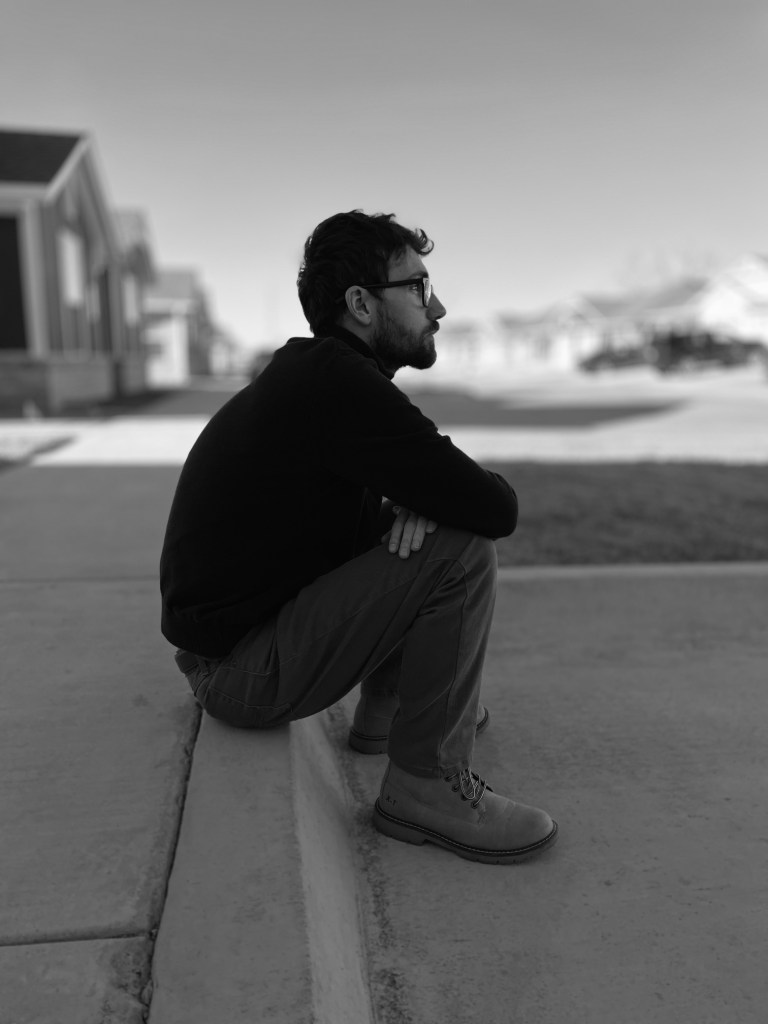
Today marks the one-year anniversary of when I first got sick with Long COVID. Maybe anniversary isn’t the right word, but certainly in some ways, I am celebrating today. Year two of this journey promises to look drastically different from the first. Soon, I’ll be under the care of some of the most respected researchers at Johns Hopkins, and that’s a privilege many Long COVID sufferers don’t have access to at this point.
There’s still so much ignorance surrounding Long COVID. I’ve read thousands of personal stories from people whose doctors and even families don’t believe them. Many are turned away at emergency rooms, their symptoms dismissed as purely psychological, or even labeled as anxiety. My own experience mirrors this too. After just three days of illness and struggling with numbness in my feet, I knew what was happening to me and knew that my life was about to change forever. I wept in front of my doctor, who labeled me as having anxiety and refused to sign papers for short term disability because my flavor of Long COVID didn’t render me bedbound. I tiredly passed the months from rheumatology to allergy to cardiology to neurology and back to rheumatology to psychology, each visit draining my savings without any answers, leaving me to face a medical system that seemed just as clueless as I was.
The clinical trials and research that is currently taking place across the U.S. and world right now have made one thing abundantly clear: finding a cure for Long COVID will take time, and there’s a possibility that a cure may never come. However, in the meantime, we must change the way we treat people who are suffering. We need to believe them, support them, and show more empathy for those who continue to struggle with symptoms. Unfortunately, this includes the harmful and often disparaging narrative around people’s vaccination status. Some people are unfairly asked about their vaccination history or made to feel as though only those who are vaccinated are suffering from Long COVID. This is simply not true. While some individuals may experience vaccine-related injuries shortly after receiving the shot, it’s clear that unvaccinated people also experience Long COVID. The spread of misinformation surrounding this only adds to the confusion and suffering, and it’s incredibly upsetting. We can’t change our circumstances by focusing on things that don’t help—like blaming individuals for the status of their vaccination or the misunderstanding of their symptoms. Instead, we must focus on understanding and support, as these are the things that can make a real difference.
Currently, it’s estimated that around 400 million people worldwide and 17 million in the U.S. are living with Long COVID, and if there’s one thing I have to say, it’s that this is absolutely real, it’s absolutely not psychological, and there’s a real cause which we’re finally beginning to understand. With my scientific background, I’ve been able to read and process hundreds of research papers on the subject; papers that still leave many questions unanswered but shed light on some promising possibilities. The emerging theories suggest Long COVID could be related to genetic factors, autoimmunity, and inflammation caused by viral remnants or viral persistence in the bloodstream. There’s even a theory about microclots obstructing oxygen from reaching cells, exacerbating the problem at a microscopic level.
The recent cuts to the NIH under the Trump administration are deeply concerning, especially for someone like me navigating the complexities of Long COVID. As the disease affects the entire body, ranging from neurological and cardiovascular issues to immune dysfunction and beyond, research into its multifaceted nature is essential for uncovering the root causes and finding effective treatments. Without adequate funding, the NIH’s ability to conduct comprehensive, wide-ranging studies is severely limited. This hampers our understanding of Long COVID’s impact on the body and delays progress toward potential solutions. For people like me, who are trying to make sense of this illness, access to cutting-edge research is crucial, as it’s the only hope we have for real answers. With fewer resources, it becomes harder to fund the necessary clinical trials and studies that could offer a clearer picture of how this condition works across different systems in the body. As a result, the suffering of millions of patients may go unaddressed, and crucial progress could be delayed.
Lately, I’ve been feeling generally better, and I’m extremely grateful for the progress I have made in the last year. I’m nowhere near where I was in March, April, and May of 2024, when I wasn’t sure if I’d ever walk again due to the severe neuropathy I was experiencing. The daily struggle just to stand up or move around felt insurmountable at times, and it was a terrifying reality. Thankfully, my “flavor” of Long COVID doesn’t resemble ME/CFS (Myalgic Encephalomyelitis/Chronic Fatigue Syndrome), and for that, I’m incredibly thankful. However, I’m constantly thinking of those who haven’t been as fortunate—those whose symptoms are far more debilitating, leaving them unable to function in the way they once did. While I don’t feel the same way I did before I got sick, my quality of life has improved to where I feel compelled to use my voice and platform to advocate for those still suffering, and I’m looking forward to being more involved in activism, especially as I participate in my clinical trial for Gamunex-C immunoglobulin, which offers hope for understanding and treating Long COVID more effectively.
The clinical trial I’m part of is one of several phase-2 trials aimed at addressing the autonomic nervous system dysfunction caused by Long COVID. The autonomic nervous system, which regulates unconscious bodily functions like heart rate, digestion, and respiration, can become severely disrupted in Long COVID patients. Many of us are living with debilitating symptoms like rapid heart rate, dizziness, and chronic fatigue—some of the most disruptive and frightening aspects of the condition. This trial is part of the NIH’s Researching Covid to Enhance Recovery (RECOVER) Initiative, a nationwide effort to understand and treat Long COVID. Specifically, my trial is studying the potential of Gamunex-C, a form of intravenous immunoglobulin, to help regulate immune responses and restore balance to the autonomic nervous system. Alongside this, the trial also explores treatments like Ivabradine to reduce heart rate and non-drug care strategies like compression belts and high-salt diets to help with conditions like postural orthostatic tachycardia syndrome (POTS), which is common among Long COVID sufferers. As someone living through this, I can attest to how deeply disruptive these symptoms can be, and I hope this research will bring meaningful solutions for the countless people still fighting.
This journey with Long COVID has been an unexpected teacher, one that’s shown me just how fragile and precious life truly is. The physical, emotional, and mental toll it’s taken has forced me to confront my own mortality in a way I never imagined. For a long time, I couldn’t help but feel like I was living on the edge, as though my body might betray me at any moment. But through this struggle, I’ve learned to embrace life in a way I hadn’t before. I’ve found joy in the small moments—whether it’s taking a walk outside, having a conversation with a loved one, or simply feeling more like myself each day. There’s a sense of freedom now in acknowledging just how fleeting everything is. That’s why, despite everything, this post feels celebratory. The improvements I’ve made in the past year—my progress—are a victory I never take for granted. It’s not just about recovery, but about rediscovering a deep appreciation for life, and for all the things that make it worth living. Even in the face of uncertainty, I’m choosing to celebrate the moments of progress, because they remind me that there is still so much beauty in life, even when it’s hard to see.
While I am thankful for the improvements I’ve experienced, my heart remains heavy for those who are still struggling, those whose conditions may not very many visible signs on the outside but whose suffering is equally real. Research like this offers a glimmer of hope, but I am painfully aware that it will take time, perhaps a long time, for real solutions to emerge. As I begin my clinical trial with Johns Hopkins, I remain committed to speaking out for those who don’t have the same opportunities, and I will continue to advocate for more research, better care, and, above all, more compassion for those suffering from Long COVID and chronic illnesses in general.
Thanks for taking the time to read my post, it means a lot to me.
Love, -C
To learn more about the RECOVER-AUTONOMIC study: https://nihrecord.nih.gov/2024/03/29/new-long-covid-trials-open
 Prairie Home Magazine